Organisation
9 new commercial roles about to get a job title
Buyers let AI agents build their supplier shortlists. Which roles will your commercial team add because of it?
You know, in 2018, revenue operations (RevOps) was a niche idea. And three years ago, hardly anyone had go-to-market (GTM) engineer on their business card. But now, in 2026, both roles are part of how B2B companies organise their commercial work.
The next shift is already visible. Buyers let AI agents build supplier shortlists and compare specs, and large customers let bots negotiate routine terms with their smaller suppliers. Commercial teams will need people who set the rules for that work and check the outcome. Your commercial team of 2034 will look very different from the one you have today.
In this article, I describe nine roles that are taking shape. For each one you'll find what the person does and where the role comes from. My experience lies in hardware companies, so I wrote this through that lens. For other industries, the list may look different.
Where the roles sit
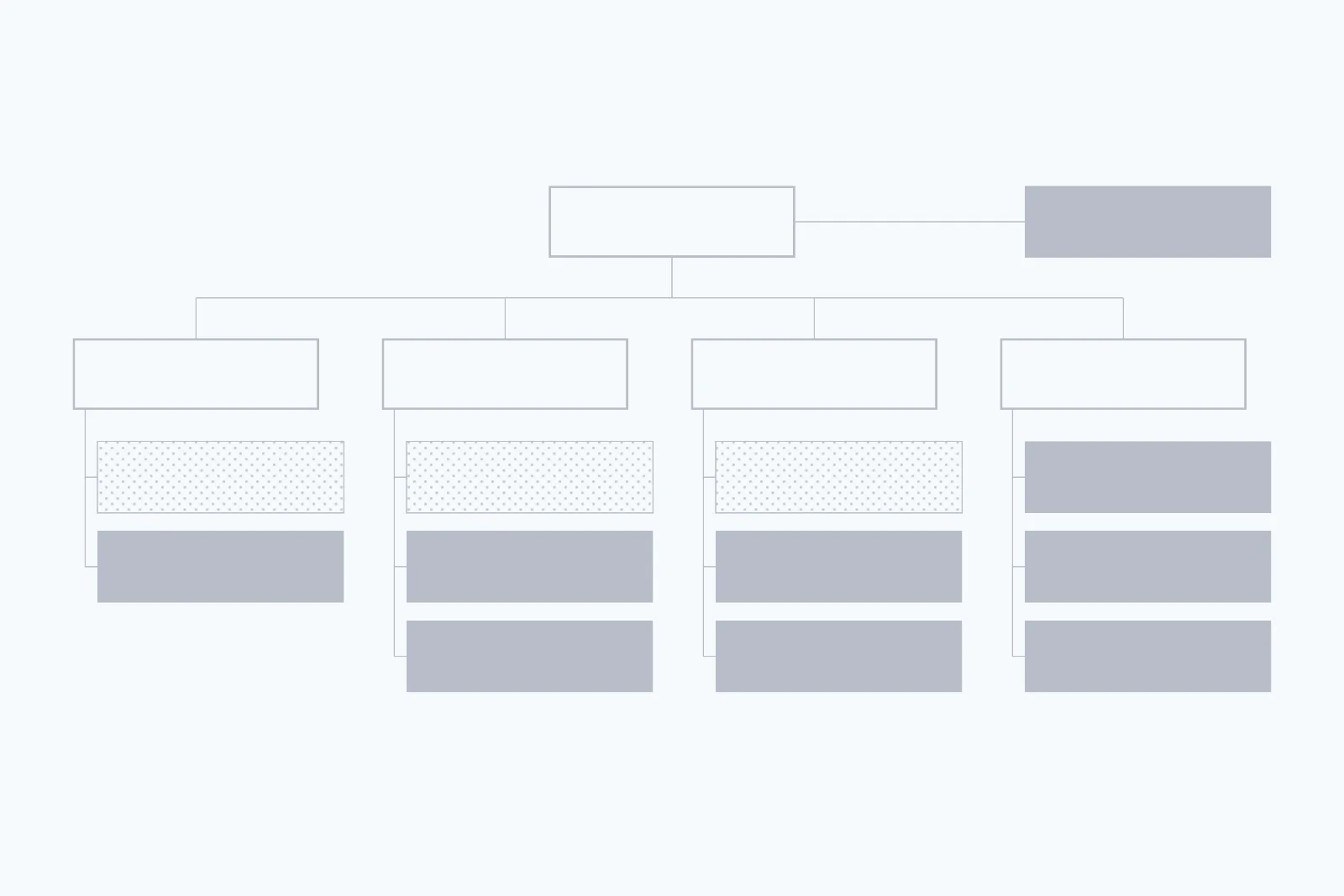
Most new roles sit next to existing ones, in marketing, sales and accounts & service. Three of them form a unit most hardware companies don't have yet: commercial operations, often called RevOps in software companies. I expect it to grow faster than any other part of the commercial team. It reports to the Chief Revenue Officer (CRO). The VP of Agentic Behaviour is a staff role to the CRO.
1. AI Brand Manager
This colleague keeps product data consistent across the website, datasheets, distributor catalogues and customer systems, and follows how AI assistants describe and compare the company. When an assistant gets a spec wrong or leaves the company out of a comparison, they trace where that comes from and fix the source.
The AI Brand Manager also looks after the agents the company runs itself, such as the agent that answers technical questions from distributors, or the one that writes the cover text for quotes. Those agents often come from different vendors. If they don't draw on the same body of knowledge about the company, their tone of voice and technical jargon start to drift apart. The AI Brand Manager makes sure they use the same facts and the same tone. I think proof from others will weigh more: for an AI, references, certifications, test reports and trade press count for more than the company's own claims.
Grows out of: brand management, communication, product information and SEO.
Signal: More and more buyers start their supplier search in an AI chat, and some of them are agents themselves. Agents tend to skip claims they cannot check.
2. Agent Negotiation Architect
This person turns commercial strategy into rules for negotiating agents. That covers the floor price and what can be exchanged for what: a shorter payment term for a lower price, or a larger volume for a discount. The rules also set the point where a salesperson takes over. The Agent Negotiation Architect sets the rules for the routine deals. These are the deals that run without a salesperson, such as reorders and standard orders from smaller customers.
The work sits between sales and finance. Payment terms are working capital, so the CFO has a say. It also means writing down what used to live in the heads of salespeople, who each had their own sense of what a customer could get. Those rules need protection too, because a customer's bot that negotiates hundreds of times keeps probing until it finds a supplier's limits. If your big clients start negotiating through purchasing bots, you'll need this role very soon.
Grows out of: sales management and pricing.
Signal: Large buyers are moving routine supplier negotiations to AI agents. A supplier without its own rules usually ends up negotiating on the customer's terms.
3. Agent Channel Manager
This role brings in new revenue. Your customers' agents want to check stock, configure a product, look up a spare part or run a technical calculation without calling anyone. The Agent Channel Manager decides which of those services the company opens up to them, and whether they are free or paid.
I see this as a new sales channel for hardware companies. Engineering knowledge that now goes into free quotes and hours of back-and-forth can be offered as a service. Deciding what stays closed is part of the job. Whatever a customer's agent can query, a competitor's agent can usually query too.
Grows out of: product management and business development.
Signal: Companies are starting to offer their data and tools as services that AI agents can call directly.
4. Long Tail Owner
The Long Tail Owner uses agents to serve existing customers who were too small to follow up: owners of machines installed ten or fifteen years ago who need parts, customers who ordered once and never came back, small reorders nobody chased, quote requests that were too small to answer.
The agents do the routine contact. The Long Tail Owner decides which groups are worth the effort, and steps in when a small customer turns out to have a bigger need. My guess is that in many hardware companies, this is revenue that was never on anyone's target. So, like the Agent Channel Manager, this role brings in new revenue.
Grows out of: account management and after-sales.
Signal: The cost of following up a customer drops as agents take over routine contact.
5. Commitment Controller
He or she sets the limits for what agents may promise customers on delivery dates, discounts, specs and warranty terms, within the rules of the VP of Agentic Behaviour. When an agent has promised something the company can't deliver, this person sorts it out with the customer.
An agent that confirms a delivery date binds the company the same way a salesperson does. So the Commitment Controller works with production and logistics to know what can realistically be promised, and adjusts the agents' limits when that changes. I expect most companies to create this role right after their first costly mistake.
Grows out of: customer service management and legal.
Signal: Companies are being held responsible for what their chatbots and agents tell customers.
6. VP of Agentic Behaviour
A governance role. Decides what agents may do on the company's behalf and which decisions stay with people, such as dropping a customer or changing a price list. Approves new uses of agents in the commercial organisation.
The VP keeps a fixed set of test cases, such as a difficult quote or a complaint, and runs them regularly to see whether the answers still hold. In a company with a management team, I believe this responsibility belongs at that level. In smaller companies, it is part of the commercial director's job.
Grows out of: the commercial director.
Signal: The models behind agents are updated several times a year, and their behaviour changes with them, often without anyone touching a setting.
7. Context World Builder
This expert keeps the knowledge agents work with up to date: prices, specs, applications, customer history, and what experienced engineers know but never wrote down. Each source gets an owner and an expiry date, so an outdated price list doesn't end up in a quote.
A large part of the job is getting knowledge out of people's heads. That takes time with senior engineers and salespeople, and in my view it only works if the company rewards people for sharing it. Then there are the corrections: when a salesperson fixes an agent's answer, that fix should reach every agent.
Grows out of: technical sales and product management.
Signal: In many industrial companies, the people with the deepest product knowledge are nearing retirement. Agents only know what they have been given.
8. Agent Librarian
The Agent Librarian keeps a register of every agent that deals with customers, whether the company built it or it came with software it bought. For each agent, the register shows who owns it, what it does, what it can access and until when it runs. Agents without an owner get switched off.
Most agents come with a new version of the CRM or the quoting tool, often switched on by default. The Agent Librarian makes sure someone decides about each of them, and gives the VP of Agentic Behaviour the overview needed to apply the rules. I'd be surprised if many companies know today how many agents already talk to their customers.
Grows out of: CRM administration and sales operations. In software companies, this sits in RevOps.
Signal: More and more business software ships with its own agents, and many of them talk to customers.
9. Commercial Process Analyst
The Commercial Process Analyst is the expert who traces the problems agents surface in the commercial process back to their causes, and decides what to fix first and which work agents can take over. The analyst follows up until the fix holds.
Agents can review every quote, call, email and order, so the list of findings grows fast. In my experience, forty findings often come down to a few causes, such as a handover between marketing and sales that nobody owns, or targets that pull in different directions. Fixing those causes takes redesign and people who change how they work, which is slower than finding the problem. I think choosing where to start is the core of the job.
Grows out of: sales operations, a role most mid-sized hardware companies never had.
Signal: Companies can now see more problems in their commercial process than they have the capacity to fix.
Who will do this work
My bet is that much of this work is already done today, on the side, by people in commercial teams who don't have the title. Think of the account manager who keeps the price list in a customer's portal up to date, or the technical salesperson every quote passes through.
Most companies won't create these roles in advance, though. Few companies ever paid someone to keep their data tidy, and the chaos kept working. I expect the same here, until a forgotten agent promises a customer something the company can't deliver.
Then the role gets a title.
Which of these nine is already on your team, without the title?
LET'S MEET
DOES YOUR COMMERCIAL ORGANISATION NEED A NEW DESIGN?
Happy to meet you for a short introduction.
